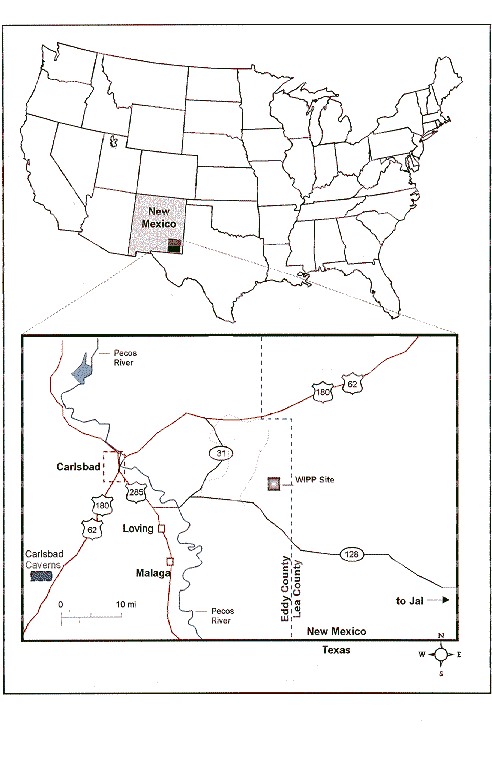
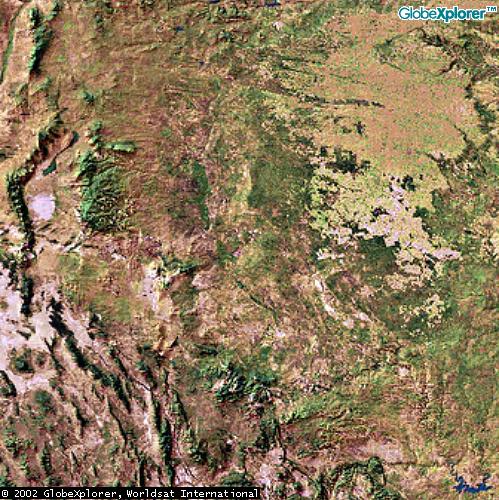
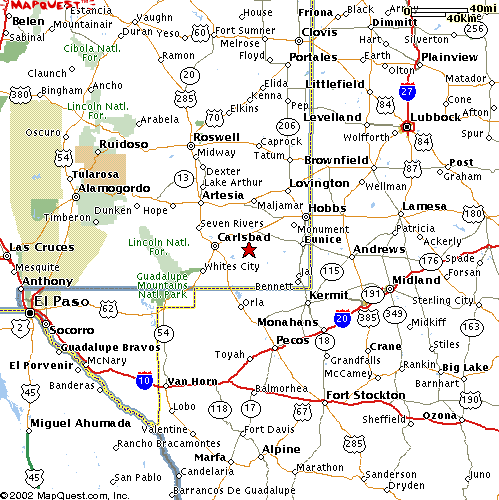
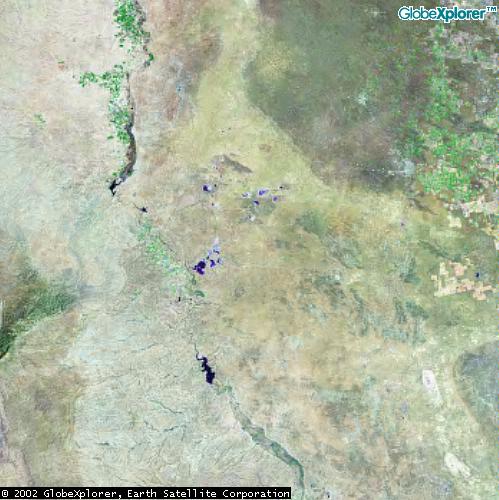
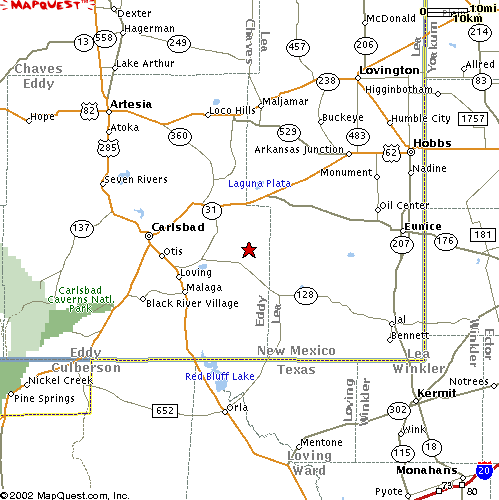
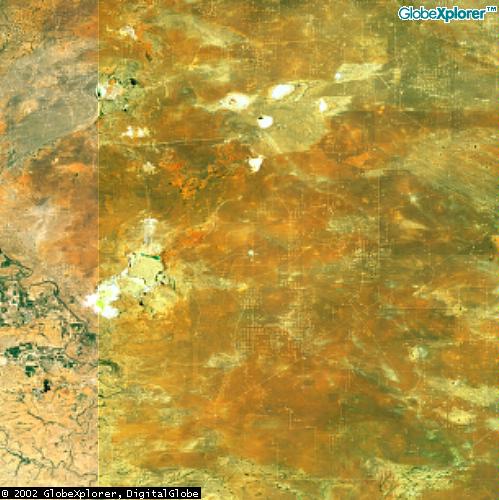
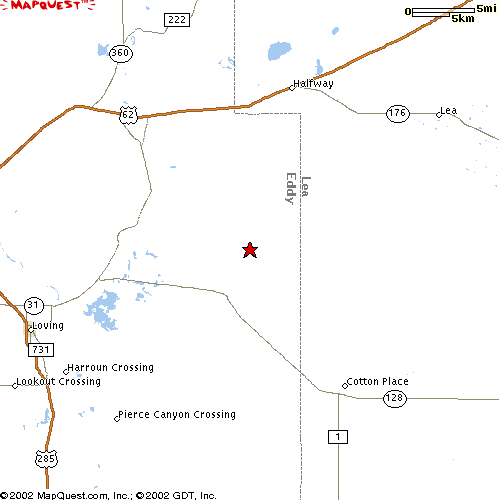
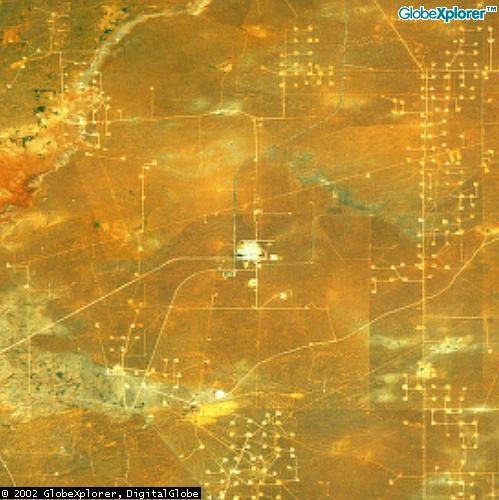
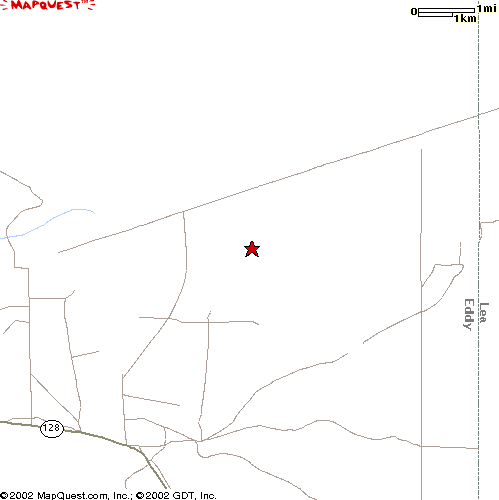
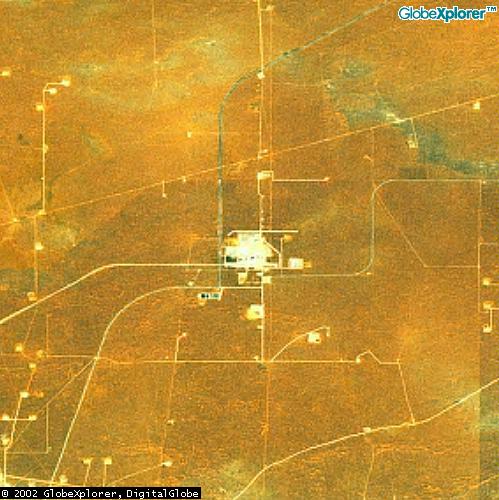
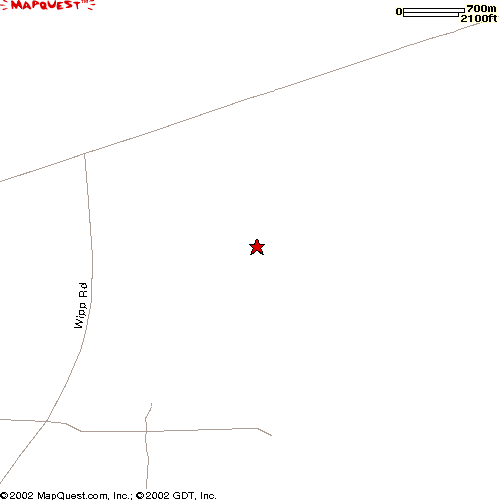
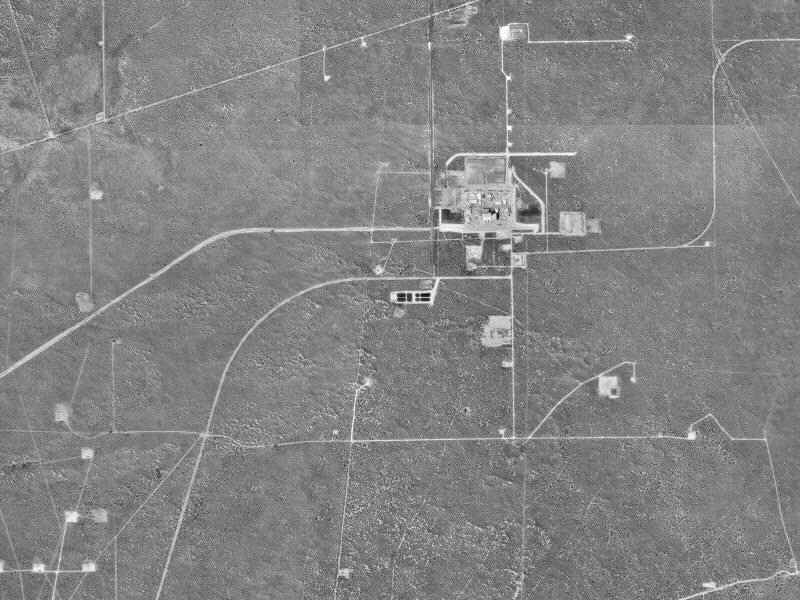
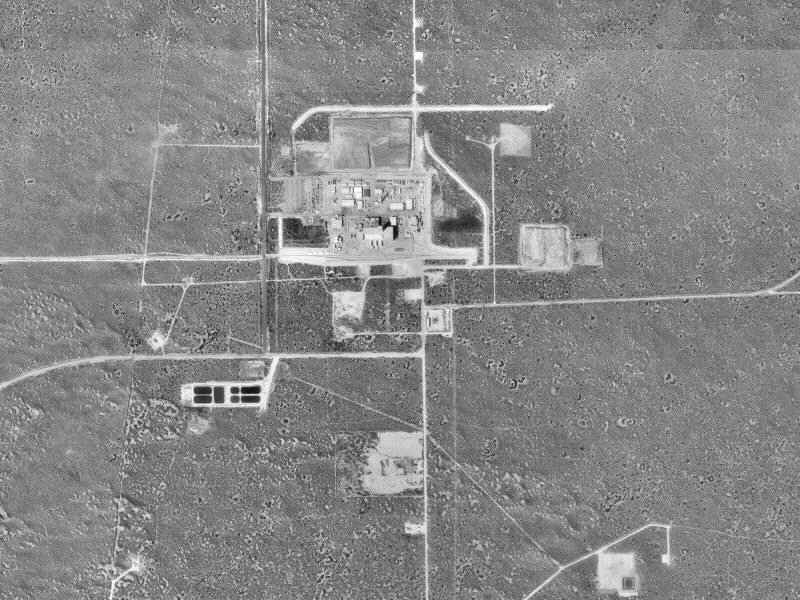
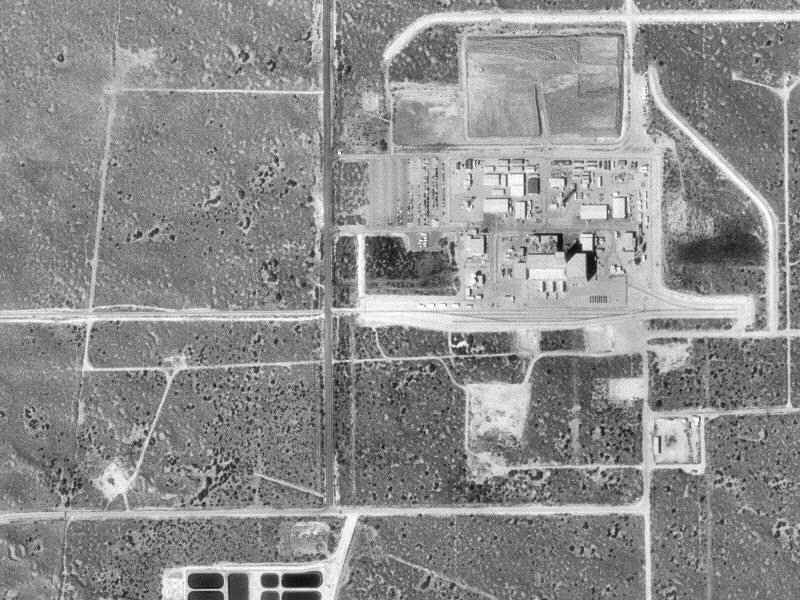
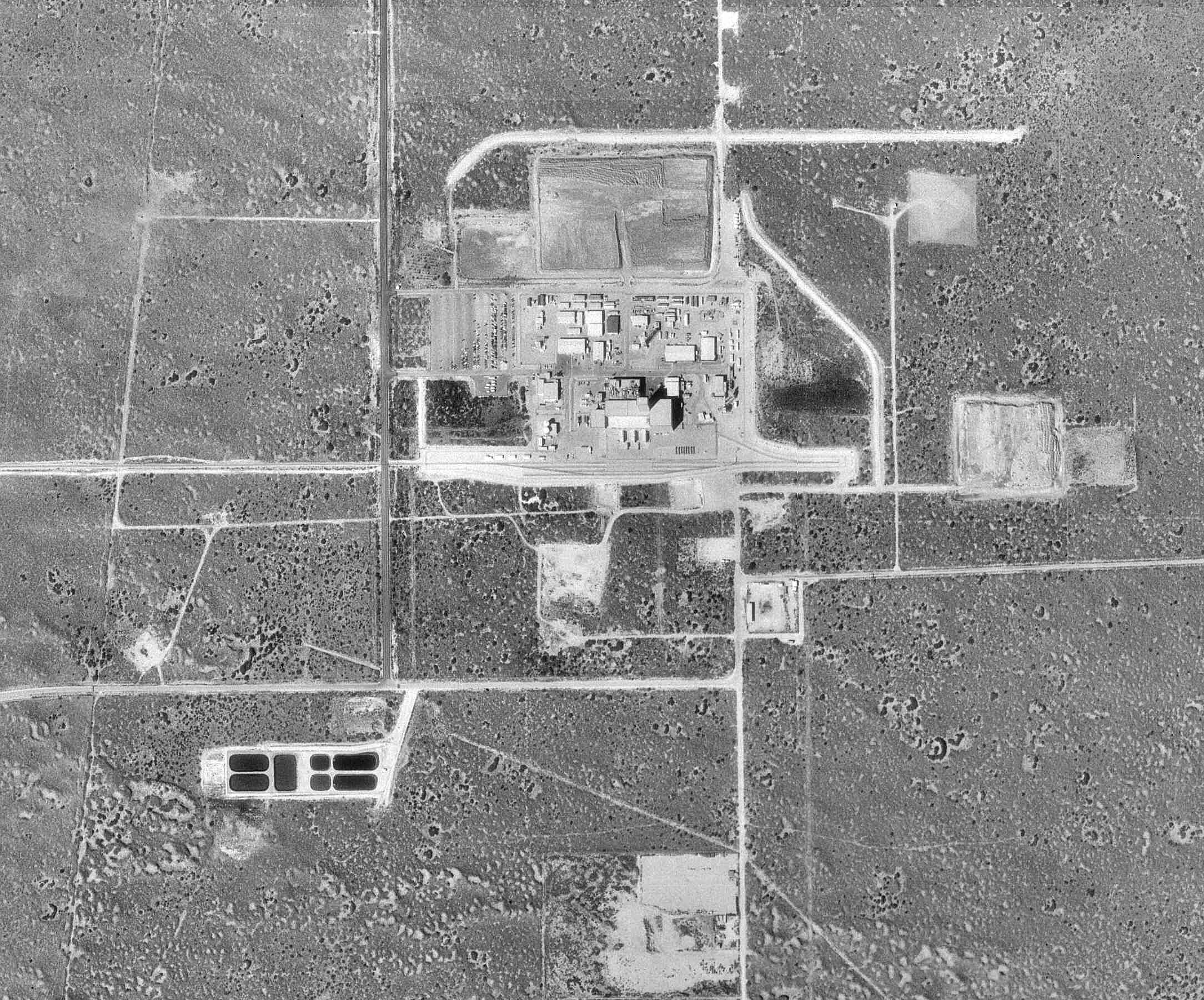
See related notice of inspection by the US Environmental Protection Agency,
September 9, 2002:
http://www.nsc.org/public/ehc/rad/backgr6.PDF
[Additional images by Cryptome.]
![[Image]](wipp-01.jpg)
August 2001
Backgrounder on the Waste Isolation Pilot Plant
An informational series by the Environmental Health Center, a division of
the National Safety Council
History of the Waste Isolation Plant
The Waste Isolation Pilot Plant (WIPP), a U.S. Department of Energy (DOE)
facility near Carlsbad, New Mexico, is the first deep geologic repository
for permanent disposal of defense-related transuranic waste in the United
States. Transuranic waste consists primarily of protective clothing, tools,
glassware, equipment, soils, and sludges that have been contaminated with
trace amounts of manmade radioactive elements, such as plutonium.
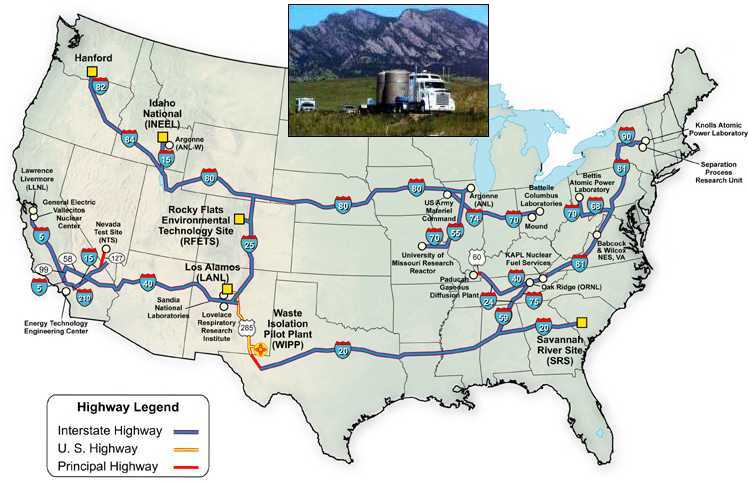
At full operation, a dedicated fleet of trucks with custom trailers will
transport waste to the WIPP from more than 20 sites across the nation.
Approximately 30 states, known as corridor states, have routes designated
for WIPP shipments. Designated routes must meet all applicable U.S. Department
of Transportation regulations.
![[Image]](wipp-02.jpg)
![[Image]](wipp-03.jpg)
A Place for the Cold War Legacy
The origins of the WIPP date to some of the earliest U.S. efforts to address
radioactive waste. During the World War II and Cold War decades, national
security dictated that speed and secrecy take precedence in weapons production.
As a result, the United States often postponed costs and work associated
with environmentally responsible disposal of defense-generated radioactive
waste. In 1955, the U.S. Atomic Energy Commission asked the National Academy
of Sciences (NAS) to study permanent disposal methods. A resulting NAS report
identified bedded salt deposits as a promising medium for geologic disposal.
The U.S. Geological Survey (USGS), after rejecting a potential site in Kansas,
identified the Salado salt formation east of Carlsbad, New Mexico, as a possible
repository site. A first borehole, probing down 3,000 feet, found salt bed
deformations and pressurized brine. Because these conditions raised the prospect
that wastes might escape from the repository, the USGS suggested moving the
site seven miles southwest.
Congress first authorized construction of the WIPP in a 1979 defense bill.
In that law, Congress stated that the WIPP was to be developed to demonstrate
safe methods for disposal of transuranic waste. The law restricted disposal
at the WIPP to transuranic waste resulting from the national defense program.
Through federal legislation, the state of New Mexico established the
Environmental Evaluation Group (EEG) in 1978 to help with oversight of the
WIPP. In the early 1980s, New Mexico and the U.S. Department of Energy (DOE)
agreed to a Consultation and Cooperation Agreement spelling out terms of
future studies, communications activities, and technical issues.
DOE has signed additional agreements with New Mexico stipulating that the
WIPP will comply with state, federal, and local environmental laws and
regulations.
Figure 1. WIPP Layout
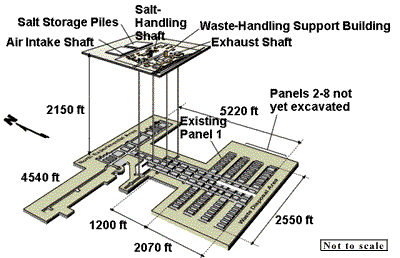
Figure 2. Geologic Profile of WIPP
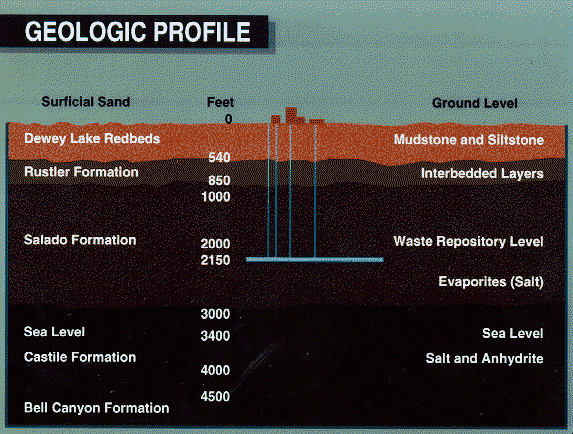
( Source: U.S. Department of Energy)
In 1981, DOE drilled the first exploratory shaft at the current site. Over
the next two years, DOE began underground excavation and decided to proceed
with full construction of the WIPP. Construction and ongoing maintenance
activities have continued ever since.
The Environmental Protection Agency’s Role
The U.S. Environmental Protection Agency’s (EPA) role in overseeing
the WIPP began in 1985, when the agency established radioactive waste disposal
regulations. In 1986, EPA ruled that mixed waste (waste that is both hazardous
and radioactive) disposed of at the WIPP must comply with the Resource
Conservation and Recovery Act (RCRA) of 1976. In 1987, a federal court
invalidated part of EPA’s radioactive-waste disposal rules, leaving
no permanent repository regulations applicable to the WIPP. DOE agreed to
follow the original rules until new ones became final in February 1996.
Withdrawal of the Land
In 1989, DOE applied to the Department of the Interior to withdraw 10,240
acres of federal land at the WIPP site from public use. The mine and aboveground
facilities were mostly built, but the lands could not be used for a repository
without formal withdrawal. In January 1991, the Department of the Interior
administratively transferred the WIPP land to DOE.
In October 1991, the House Interior and Insular Affairs Committee adopted
a resolution to nullify the administrative transfer, and in that same month,
New Mexico filed suit against DOE claiming that the land transfer had to
be made by Congress and could not be made solely by the Executive Branch.
A month later, however, the U.S. Senate unanimously approved the
interdepartmental transfer of WIPP land as proposed by New Mexico’s
Senators, Pete Domenici (R-NM) and Jeff Bingaman (D-NM). In October 1992,
Congress passed and President Bush signed the WIPP Land Withdrawal Act (PL
102-579).
The No-Migration Requirement
Because some of the transuranic waste destined for disposal at the WIPP is
classified as both radioactive and hazardous, concern was raised as to whether
these wastes would be subject to the “no migration” requirements
applicable under RCRA. DOE had been proceeding as though the RCRA requirements
would apply. But in September 1996 Congress passed and President Clinton
signed into law provisions specifying that RCRA no-migration requirements
would not apply to WIPP waste. The radioactive waste requirements on their
own would provide adequate protection for human health and the environment.
Opening the WIPP
The September 1996 amendments to the 1992 WIPP Land Withdrawal Act (PL 104-201)
set November 30, 1997, as a nonbinding date for the WIPP site to open, pending
certification by EPA that the site met environmental regulatory requirements.
On October 30, 1996, DOE submitted its compliance certification application
for the WIPP to EPA. On May 13, 1998, EPA certified the WIPP facility. On
May 15, 1998, the New Mexico Environment Department issued a draft RCRA permit
for disposal of mixed waste at the WIPP.
On March 26, 1999, the WIPP facility began receiving shipments of non-mixed
transuranic waste. On October 27, 1999, the New Mexico Environment Department
issued its final decision to grant a Hazardous Waste Facility Permit for
the WIPP.
This document was prepared by the Environmental Health Center under a cooperative
agreement with the U.S. Department of Energy.
For more information on the WIPP
U.S. Department of Energy
The WIPP Information Center
Carlsbad Field Office
P.O. Box 3090
Carlsbad, NM 88221
Phone: (800) 336-WIPP (9477)
E-mail: infocntr@wipp.carlsbad.nm.us
World Wide Web:
http://www.wipp.carlsbad.nm.us
Environmental Health Center
A Division of the National Safety Council
1025 Connecticut Avenue, NW, Suite 1200
Washington, DC 20036
Phone: (202) 293-2270
E-mail: ehc@nsc.org
World Wide Web:
http://www.nsc.org/ehc/wipp.htm